SoBigData Academy Camp 2026: Upskill yourself with Free & Online Courses
Learn practical data science skills in an interdisciplinary way — no prior experience needed.
The SoBigData Academy Camp is a free online learning program (Feb–Apr 2026) designed to make data science accessible to students from any academic field (social sciences, law, humanities, business, and more). Start here: https://sobigdata.unipi.it/mod/page/view.php?id=1944&forceview=1
Key dates
- Student registration: 1 January – 31 January 2026
- Camp runs: 1 February – 30 April 2026
- Datathon invitation: 1 May 2026 (selected students from who complete the courses)
What you’ll do during the Camp
- Complete a selection of free SoBigData Academy courses:
- Workload: ~37 hours total (flexible, self-paced) ≈ 5 hours/week
- Join monthly online events
- Teachers and invited experts share real use cases and answer questions
- Receive a Certificate of Participation
- Signed by the SoBigData Research Infrastructure
- Opportunity to participate to the final Datathon challenge (May 2026)
- Best projects: featured interview + blog post on SoBigData channels
- €500 prize for the winners (in different category)
Who should participate?
This camp is open to all levels, especially students outside traditional computer science/engineering who want practical skills in: statistics and data analysis, responsible/ethical data use and understanding social and institutional data.
How to participate (students)
- Go to: https://sobigdata.unipi.it/mod/page/view.php?id=1944&forceview=1
- Register by 31 January 2026
- Follow the courses during Feb–Apr 2026
- Join the online events (monthly)
- If you complete the courses, you’ll be invited to the May 2026 Datathon (optional)
Questions? Email us at info@sobigdata.eu
What you’ll learn (courses & competences)
| Course | What it covers | Competences Acquired | Possible Applications |
| Basic Python | Introduction to one of the most used language in data analysis | Basic programming and data manipulation. | Automating small research tasks, reading data files, and manipulating data. |
| Database | How data is stored and retrieved in structured systems (e.g. university datasets, surveys). | Understanding data organization and SQL basics. | Understanding database structures, populating them with data, and retrieving information. |
| Data Analysis | How to explore, describe, and interpret data patterns. | Descriptive statistics, analytical reasoning. | Evaluating datasets, comparing, and producing indicators |
| Data Mining & Machine Learning | How computers can find patterns or predict trends. | Fundamental understanding of algorithms and their ethical implications. | Identifying trends in data and hidden patterns and rules. |
| Legal & Ethical Aspects of Data Science | How data use interacts with law, privacy and ethics. | Awareness of GDPR, the AI Act, and data governance. | Evaluating responsible data policies in projects and institutions. |
| Data Theory & Society | Understanding data’s social, cultural, and political dimensions. | Critical thinking about technology and society. | Research on digital democracy, media, and social impacts. |
| Complex Network Analysis | How relationships between entities can be represented as networks. | Basics of graph thinking and visualization. | Mapping networks such as social, collaborations, or institutional structures. |
| Business Model Data-Drive Innovation |
Using data to create value and innovation in organizations. | Strategic planning, innovation mindset. | Designing business or policy models informed by data. |
| Data Visualization & Visual Analytics | Presenting information clearly through visuals. | Data visualization and communication skills. | Making an understandable and meaningful graphic representation of the results. |
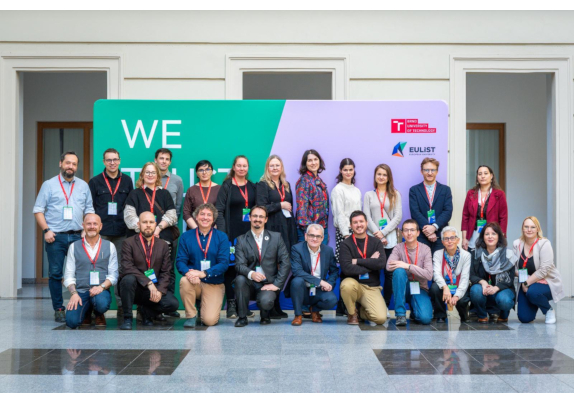
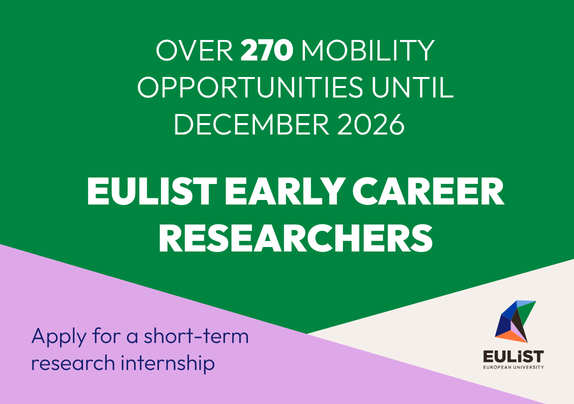
The camp could be of significant interest to Master’s students, PhD candidates, and early-career researchers from EULiST.
Participants will receive an official certificate, which could potentially be used to assign educational credits for students.
Don’t miss this opportunity!